

Representative mission scenarios
Public Scenarios
Public scenarios provide non-sensitive mission examples for ports, offshore energy, subsea routes and protected sites before any private technical or site-specific discussion.
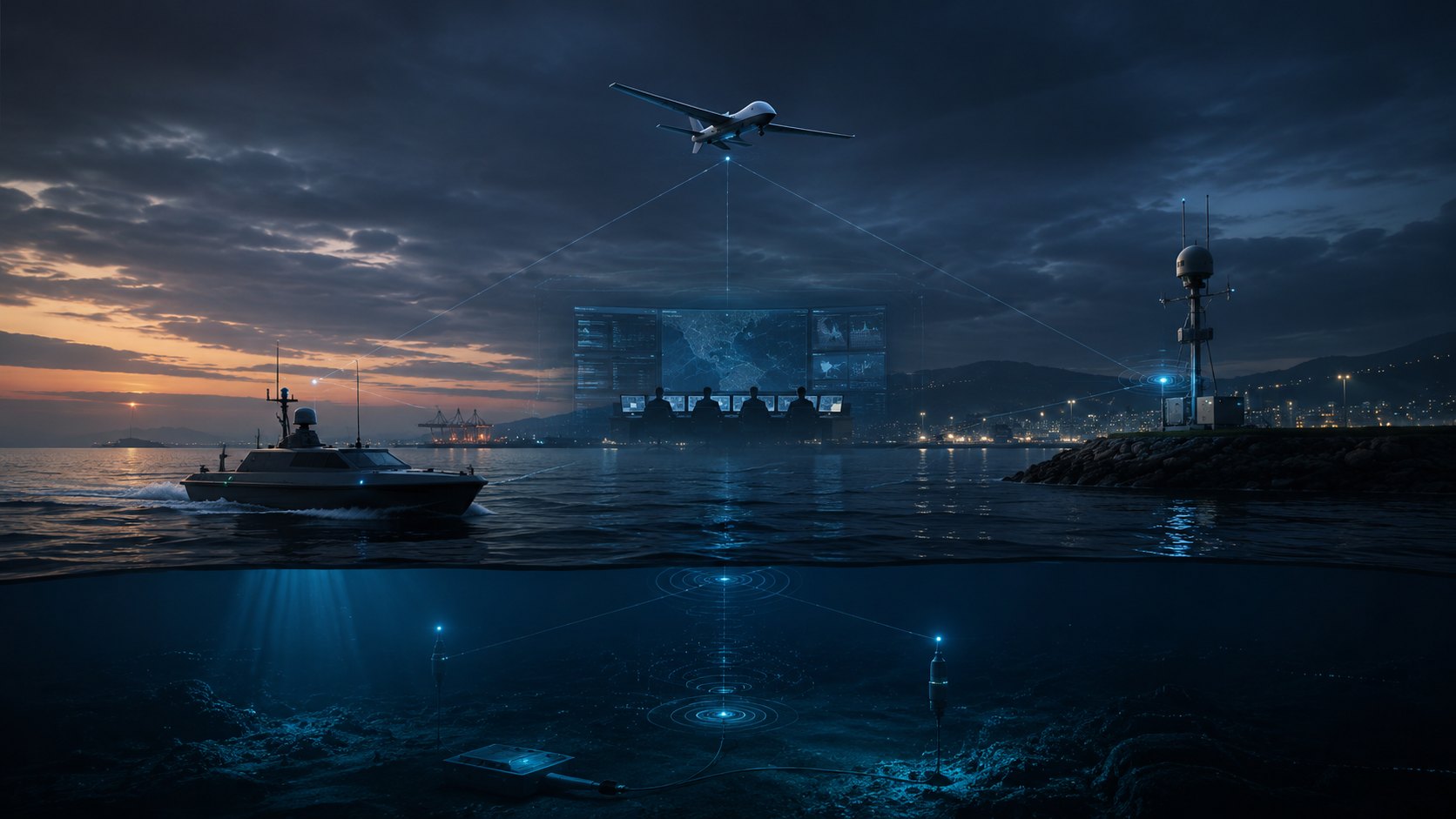
Scenario summary
Four public routes into private mission briefing
Waterside context, restricted water, berths, perimeter zones and operator-reviewed event records.
Remote assets, service routes, maritime approach context and infrastructure-owner reporting.
Route baseline, change review, anomaly triage and subsea evidence route.
Protected-site awareness, operator review, escalation governance and evidence-ready reporting.
Public boundary
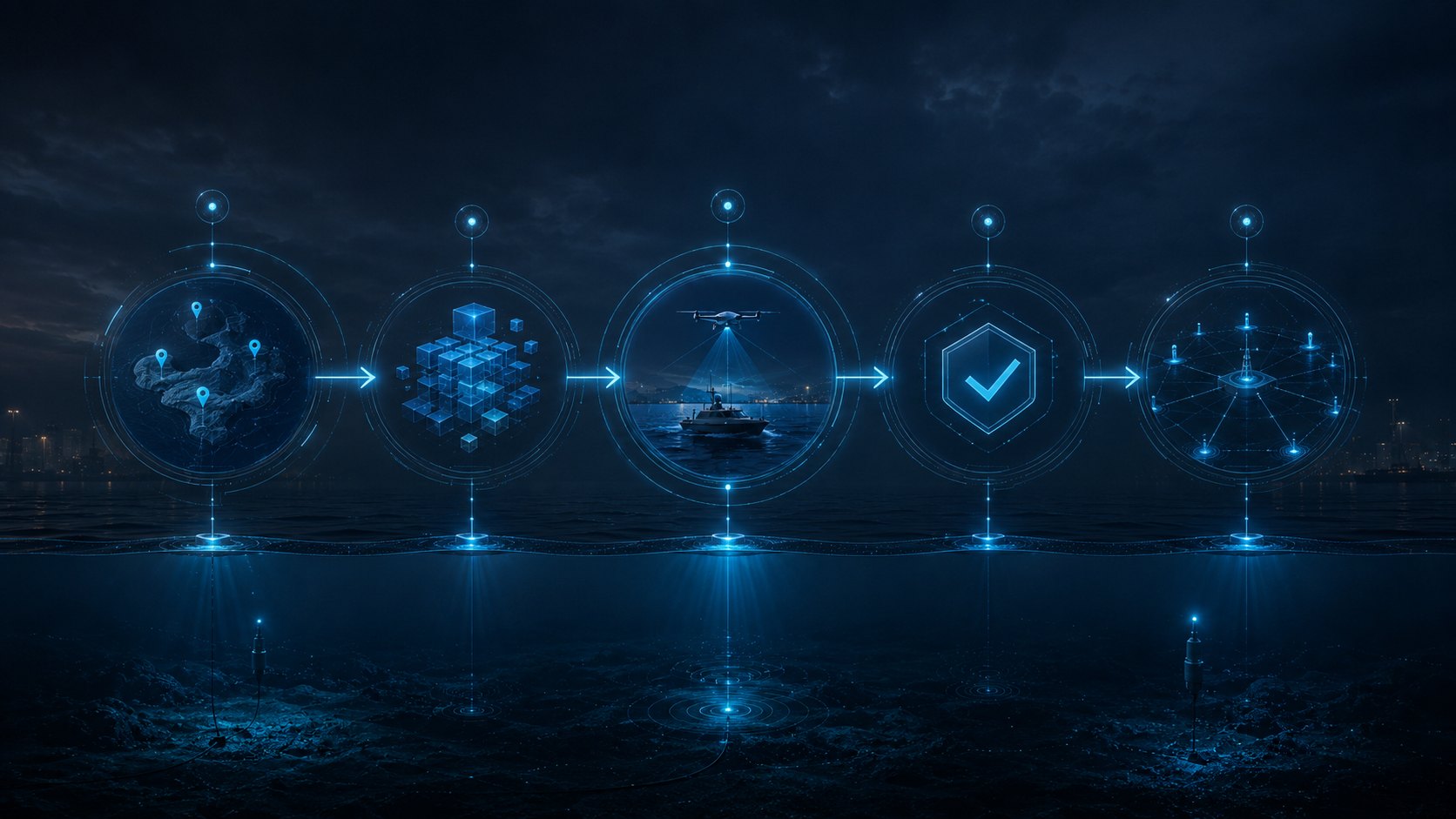
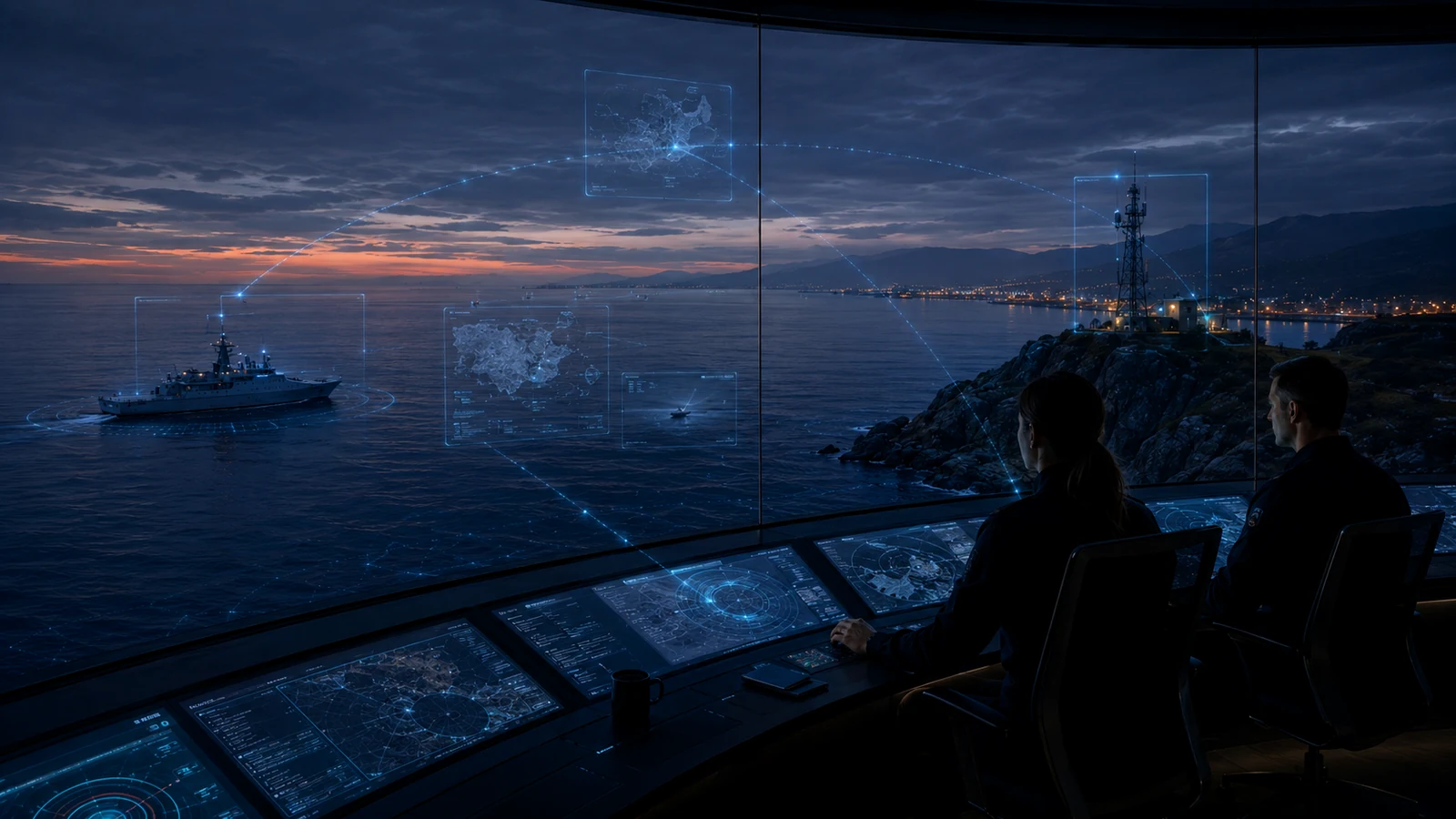
Scenario visuals are representative
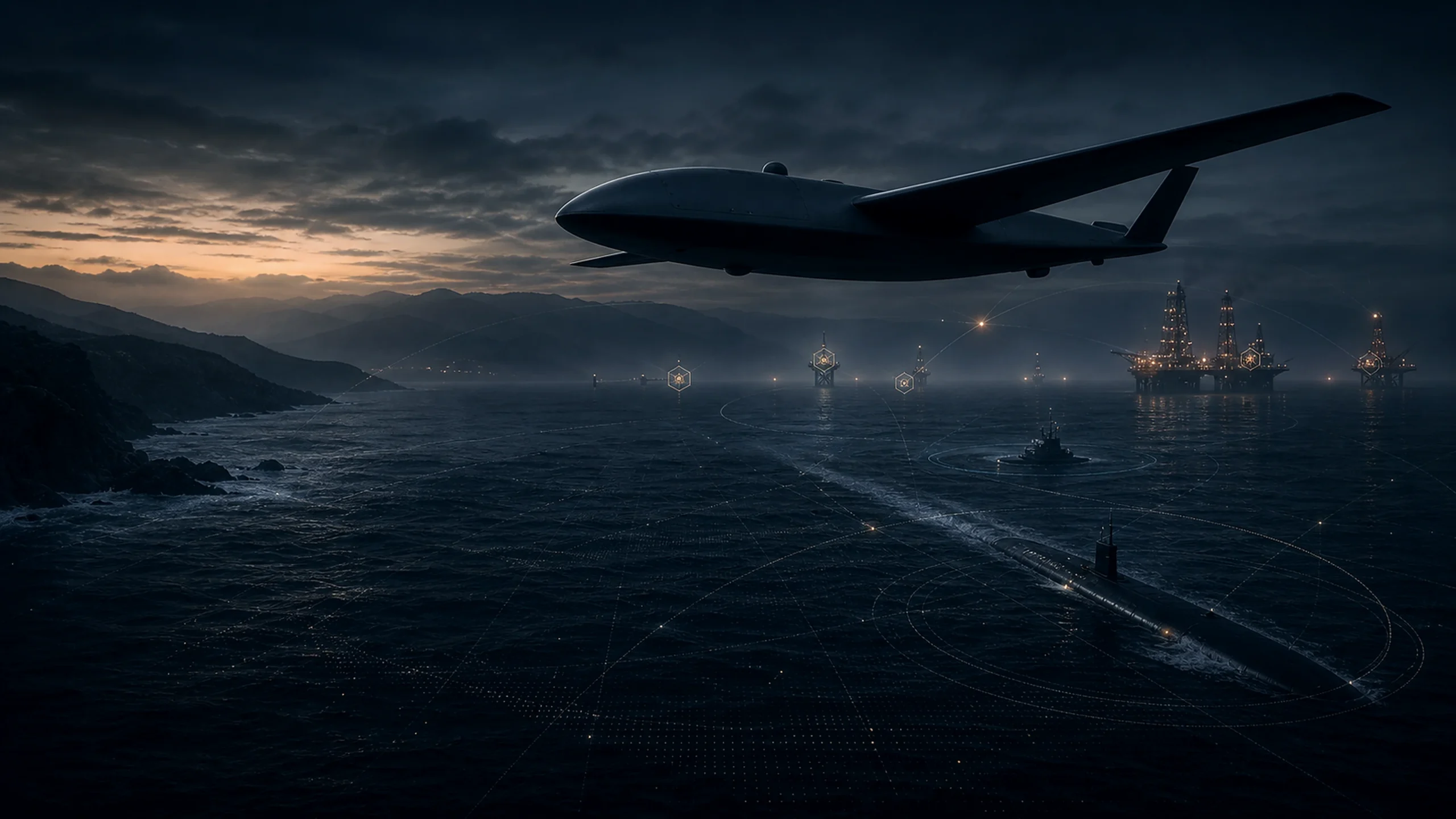 Air LayerSurface Layer
 Subsea Layer
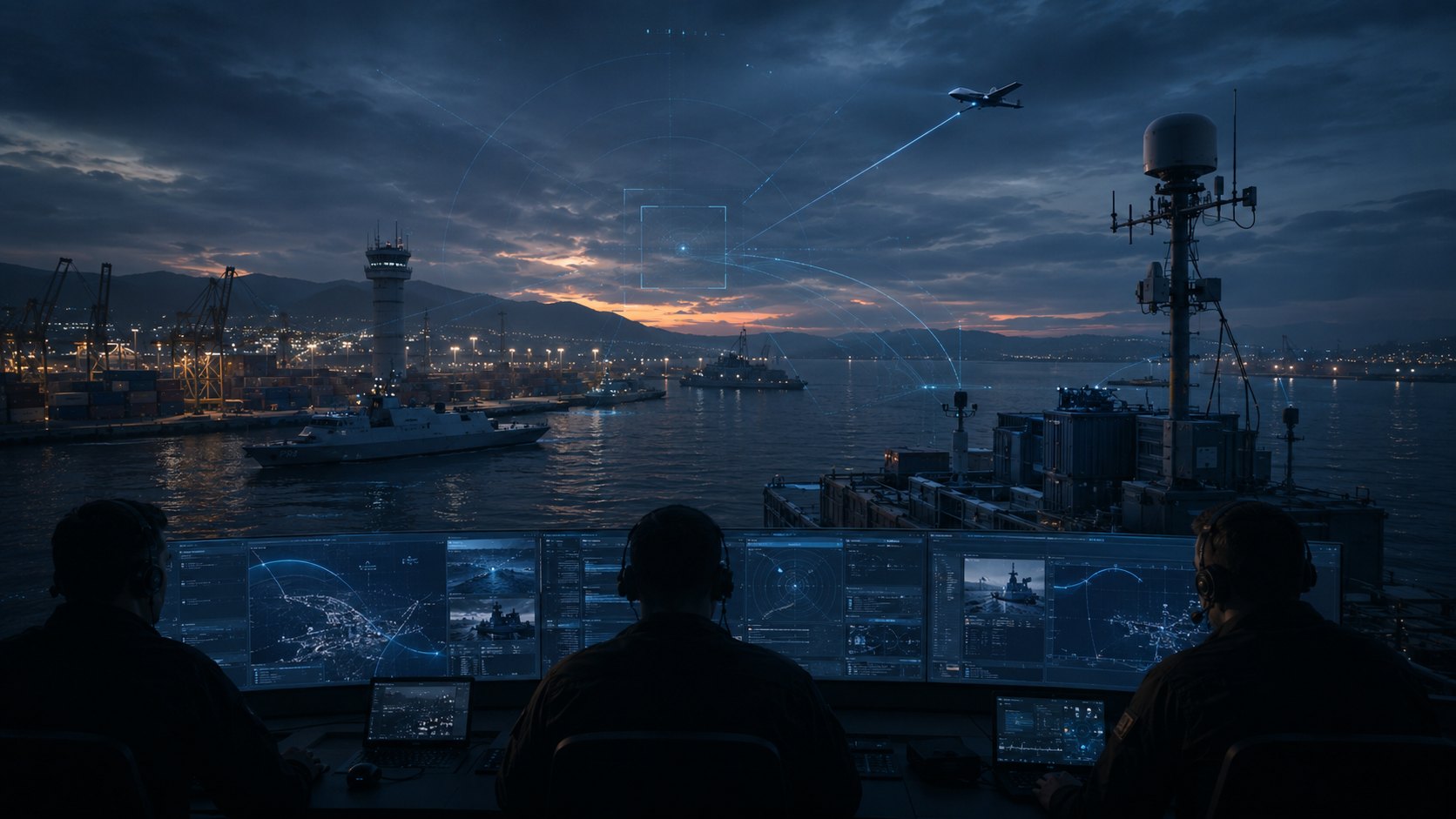 Fixed Site Layer
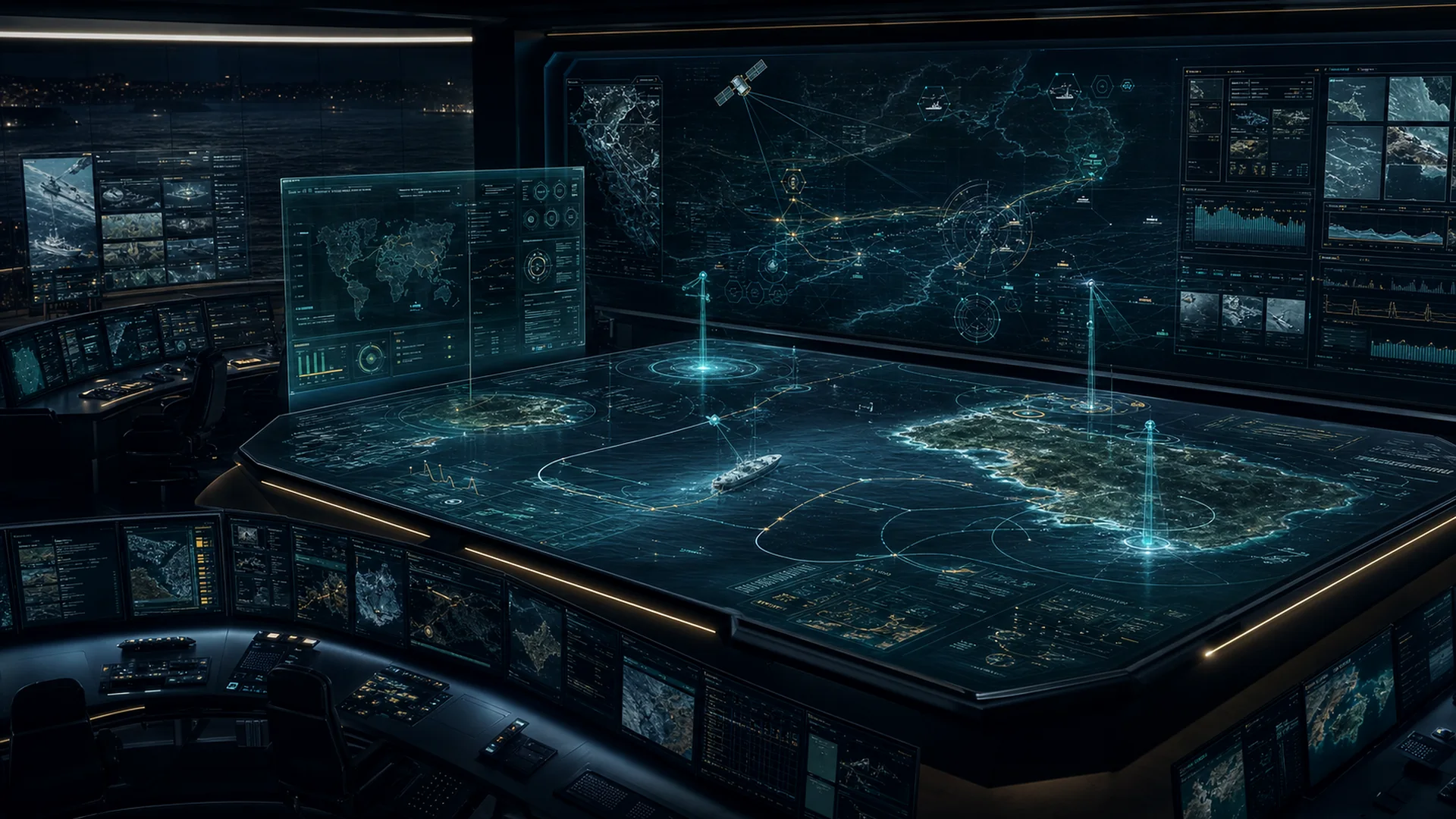 Command & Control
 Sensor Fusion
 Evidence Layer
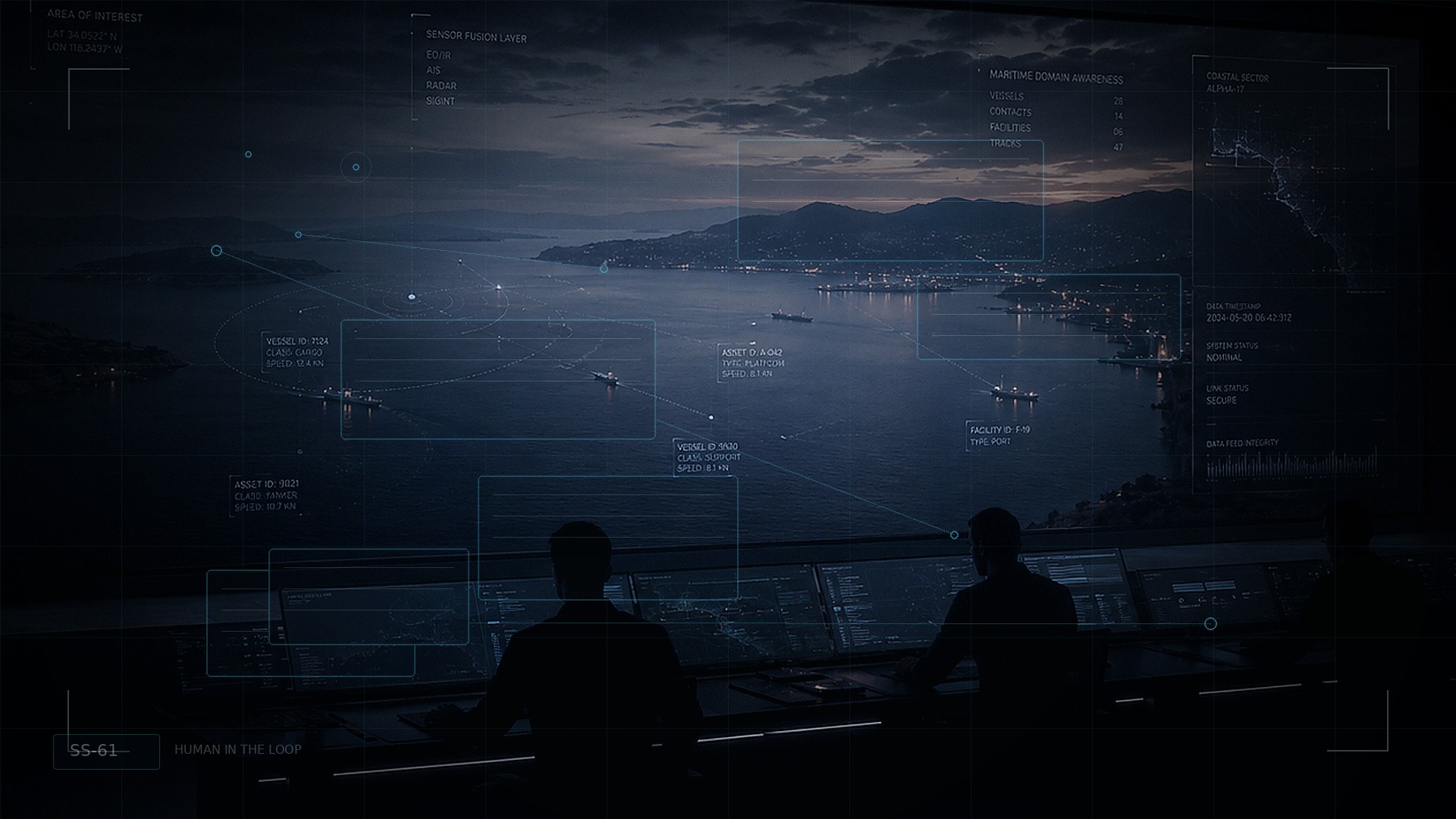 Human Governance
Governance boundary
Public information is deliberately limited
Technical specifications, deployment assumptions, restricted payload details, supplier data, operational methods and sensitive performance claims are available only through controlled review, lawful-use screening and appropriate confidentiality arrangements.
Autonomy supports awareness, triage and decision support. Accountable humans remain responsible for review, authorisation and escalation.
Procurement, partner and public-sector conversations are handled through controlled qualification and mission context review.
Mission workflows are framed around what was sensed, fused, recommended, decided and reviewed.
The public website avoids sensitive methods, supplier details, operational procedures and protected technical designs.
Proof and evidence panel
Controlled disclosure route
Related routes
Continue through the Sky Shadow system
Next step
Request a private mission briefing
Qualified procurement, partner, public-sector, infrastructure-owner and investor enquiries are routed through controlled review.