
System Layer / Mission Intelligence
SHADOWCORE
Sensor fusion, anomaly review and mission intelligence for Sky Shadow operating pictures across air, surface, subsea and fixed-site environments.
Mission Context
The correlation layer between sensors, operators and decision-ready records
SHADOWCORE is the layer that helps convert multi-source sensing into clearer event context for operators. It is designed to support persistent awareness by organising inputs, surfacing anomalies, preserving review context and preparing structured outputs for command, briefing and evidence workflows.
The page remains public-safe: it describes the mission architecture and operator-reviewed workflow without publishing deployment-sensitive configuration details, restricted procedures or site-specific assumptions.
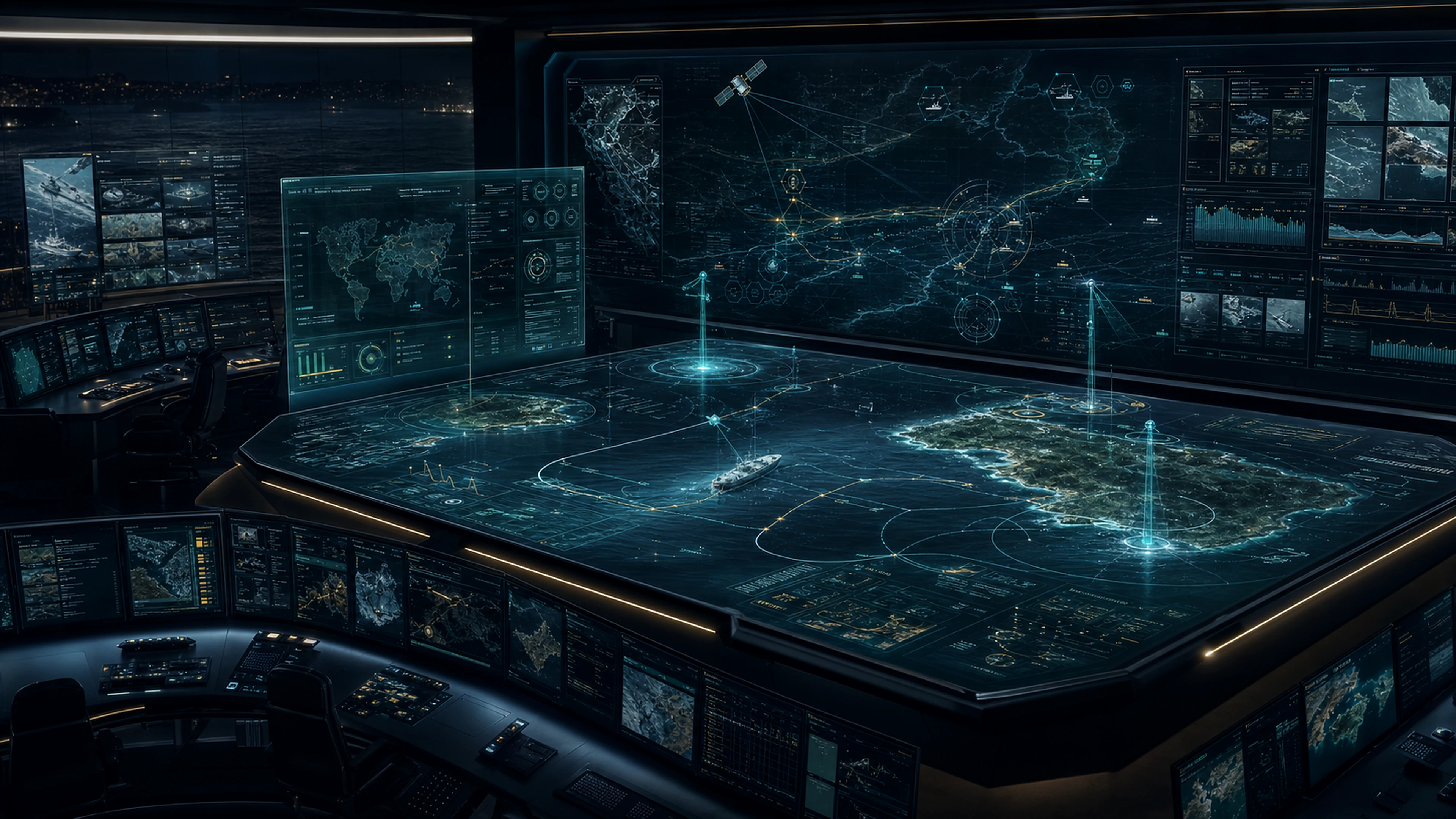
Bring relevant sensor, platform and site context into one mission picture.
Support trained operators with structured context, not uncontrolled automation.
Prepare event logs, review notes and briefing outputs for accountable decisions.
Extend coverage through controlled pilot routes and defined governance.

Capability Areas
What SHADOWCORE brings together
Requirement framing
The operating requirement is framed by site, asset, risk, operating authority, coverage need and evidence pathway before any architecture is selected.
- Mission definition
- Stakeholder context
- Pilot scope
Layered sensing
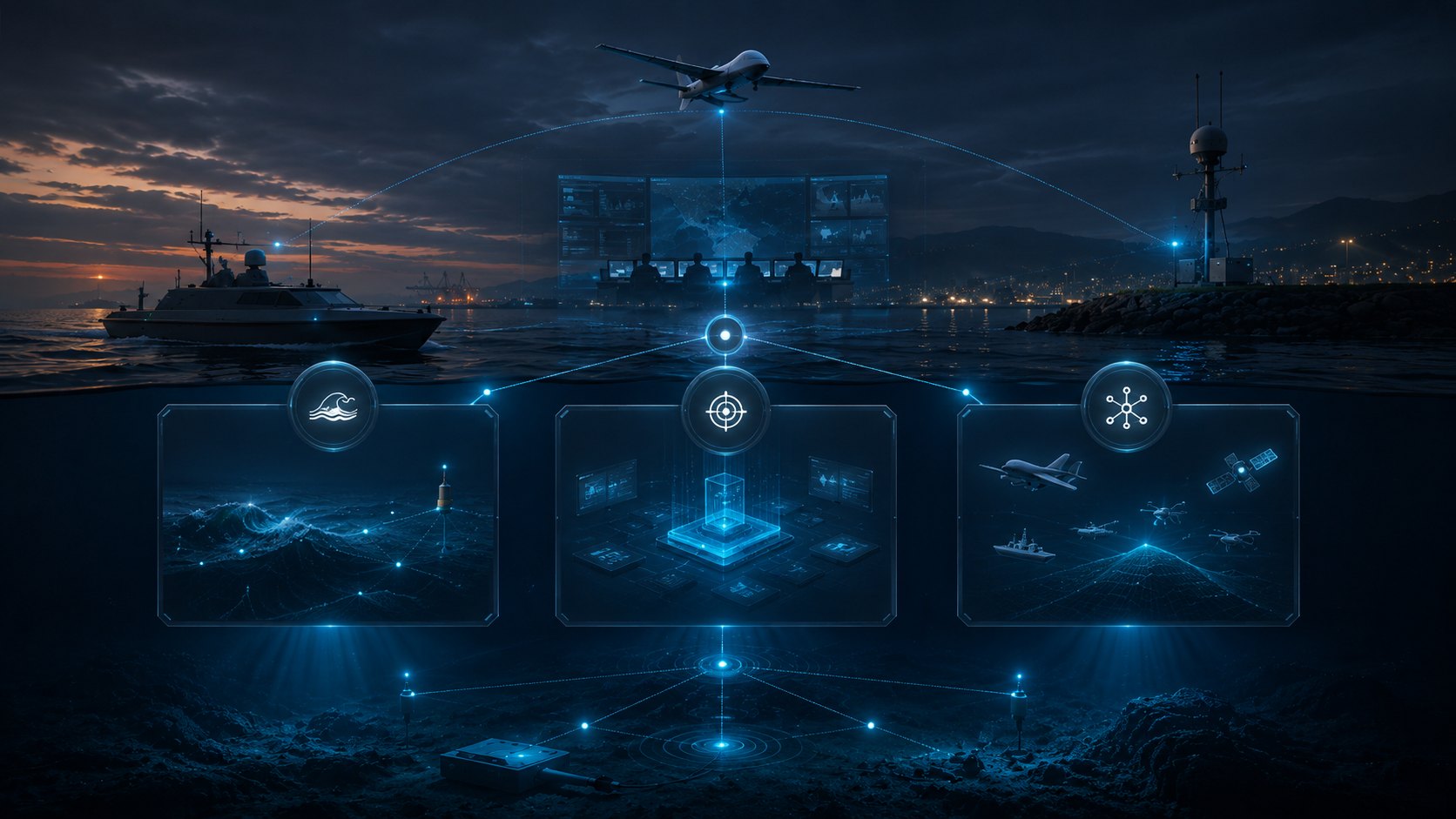
Air, surface, subsea and fixed-site sensing can be joined where the environment requires a multi-domain view and a coherent operator picture.
- EO/IR context
- RF and radar review
- Acoustic and subsea inputs
Human-commanded autonomy
Autonomy supports repeatable tasking, event surfacing and sensor cueing while trained operators retain command, review and escalation responsibility.
- Operator review
- Escalation paths
- Accountability model
Evidence-ready outputs
Events are organised into mission logs, briefing outputs, audit trails and reviewable records for decision-makers and authorised stakeholders.
- Research records
- Mission logs
- Briefing packs
Fusion Logic
From scattered signals to an operator-reviewed mission picture
SHADOWCORE is positioned as the intelligence layer that normalises incoming context, compares it against mission intent, helps prioritise anomalies and hands decision-ready information into operator-facing systems such as ARGUS, AEGIS and Holo-Fusion.
The public architecture focuses on responsible awareness: sensor context is fused for review, not for uncontrolled action. The workflow is designed to preserve the reasoning chain around what was observed, what changed, who reviewed it and what record was created.
Mission Systems
Software, sensing and evidence layers connected into one architecture
SHADOWCORE
Sensor fusion, anomaly review and mission intelligence layer that helps turn multi-source sensing into a coherent operating picture.
ARGUS
Multi-sensor correlation and persistent watch layer for operator-reviewed awareness across defined environments.
AEGIS
Human-commanded tasking, escalation and command workflow layer for authorised operators and controlled mission teams.
Research
Evidence records, mission logs, reporting and briefing layer for reviewable decision support and accountable communications.
PHAROS
Fixed-site and perimeter awareness layer for protected locations, route corridors and infrastructure-adjacent contexts.
HORIZON-CUAS
Counter-UAS awareness layer for authorised operators around protected sites and sensitive operating areas.
Holo-Fusion Ready
Designed to feed the Holo-Fusion interface
SHADOWCORE prepares data for operator review by normalising sensor inputs, supporting anomaly review, structuring track confidence and sending decision-ready context into Holo-Fusion panels, tables and software views.
The intended presentation is a controlled mission picture: operators can see context, confidence, timing, related assets and review notes without exposing restricted deployment logic on the public site.
Operating Context
Built for maritime, infrastructure and multi-domain awareness workflows

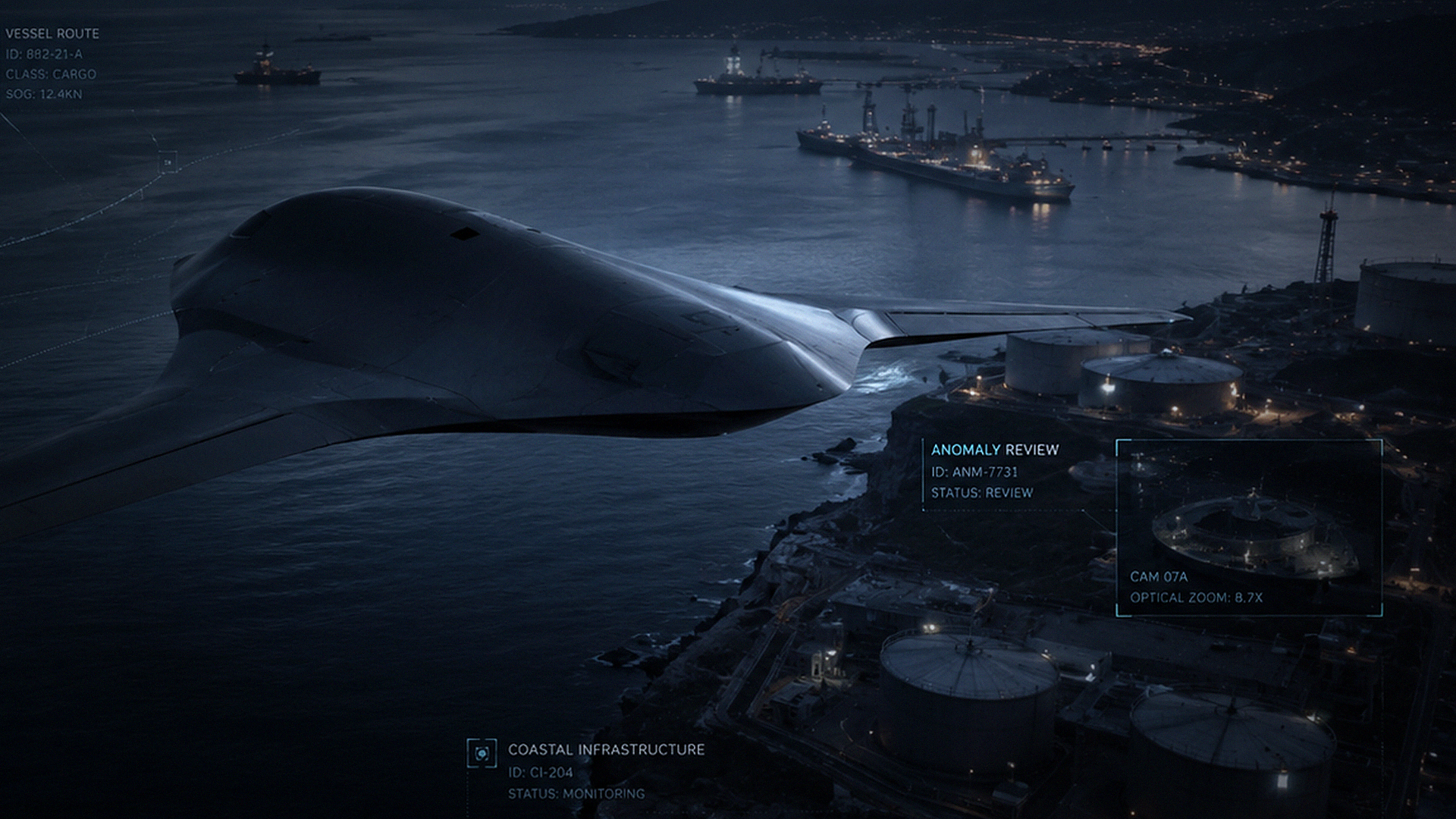

Evidence Chain
Designed for briefing quality, audit clarity and responsible disclosure
SHADOWCORE supports an evidence-conscious workflow where event context can be prepared for mission logs, internal review, controlled partner briefings and post-event analysis. The purpose is not to overwhelm teams with raw feeds; it is to preserve the right context around important changes.
Outputs can be aligned with procurement and pilot needs: operating context, sensing layer, command model, review boundary, reporting expectation and governance route.
Deployment Path
From requirement to controlled deployment
Map the mission
Define the site, assets, operating area, decision points, stakeholder needs and review expectations.
Select the architecture
Choose platform, sensor, autonomy, software and evidence layers around the requirement, not around a generic product list.
Run a controlled pilot
Validate workflows, reporting outputs, operator handover, briefing quality and support requirements before scale-up.
Train and govern
Align operators, escalation paths, data handling, review boundary and accountability assumptions.
Scale deliberately
Extend coverage only after the pilot route, governance model and support pathway are clear.
Procurement Notes
Buyer-facing structure, clean evidence and responsible public detail
Public information is intentionally high-level and defensive. Detailed deployment, integration and operational material is handled through a controlled briefing route.
Private Briefing
Discuss the mission context with Sky Shadow
Share the operating environment, asset group, timescale and preferred pilot route. Sky Shadow can then map the requirement to platform, sensing, command and evidence layers.