

Public Scenario / Offshore Energy
Offshore Energy Protection
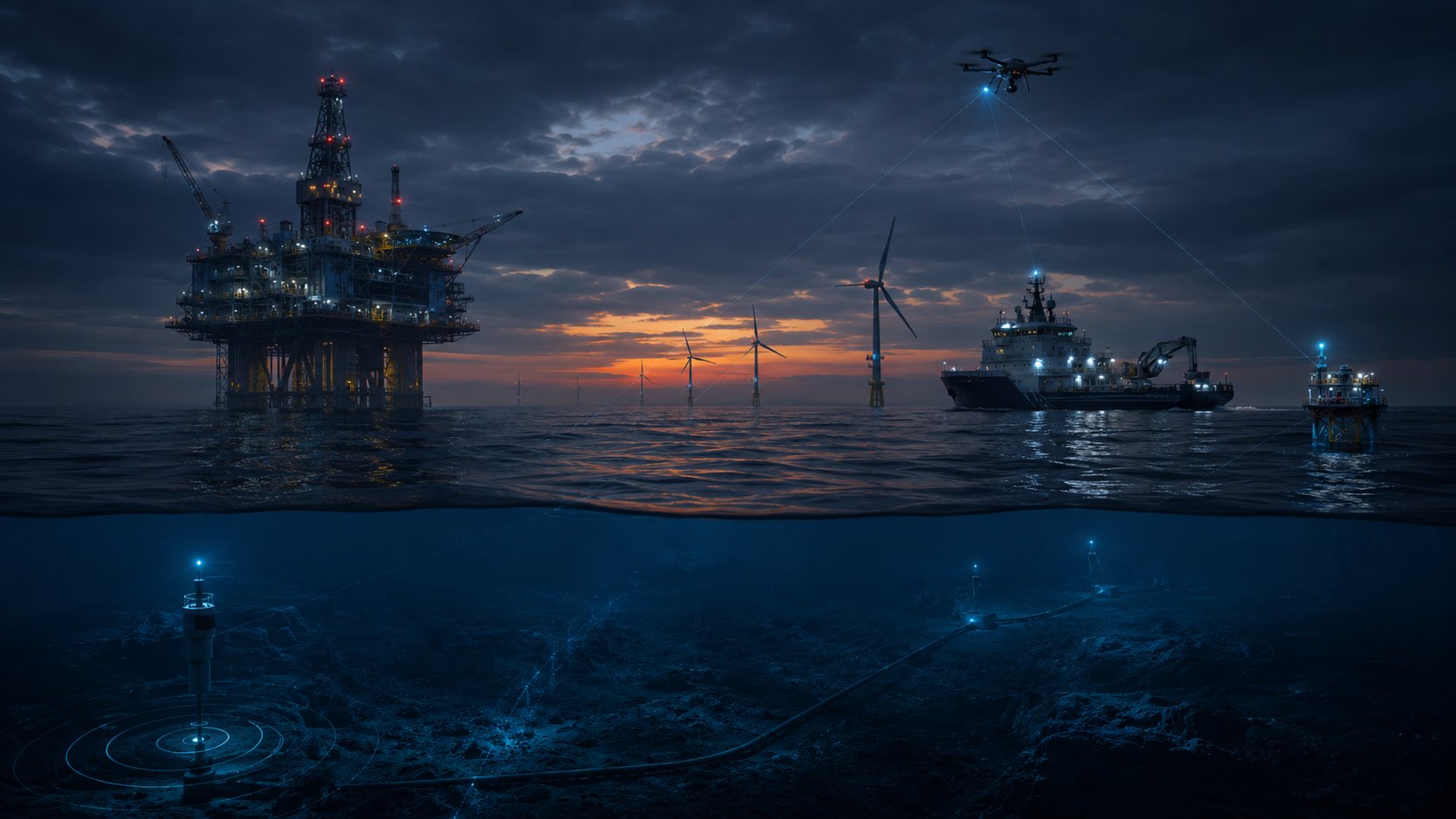
A public-level mission architecture for offshore platforms, wind farms, subsea export routes, service vessels and remote maritime operating areas where persistent awareness, operator review and evidence quality matter.
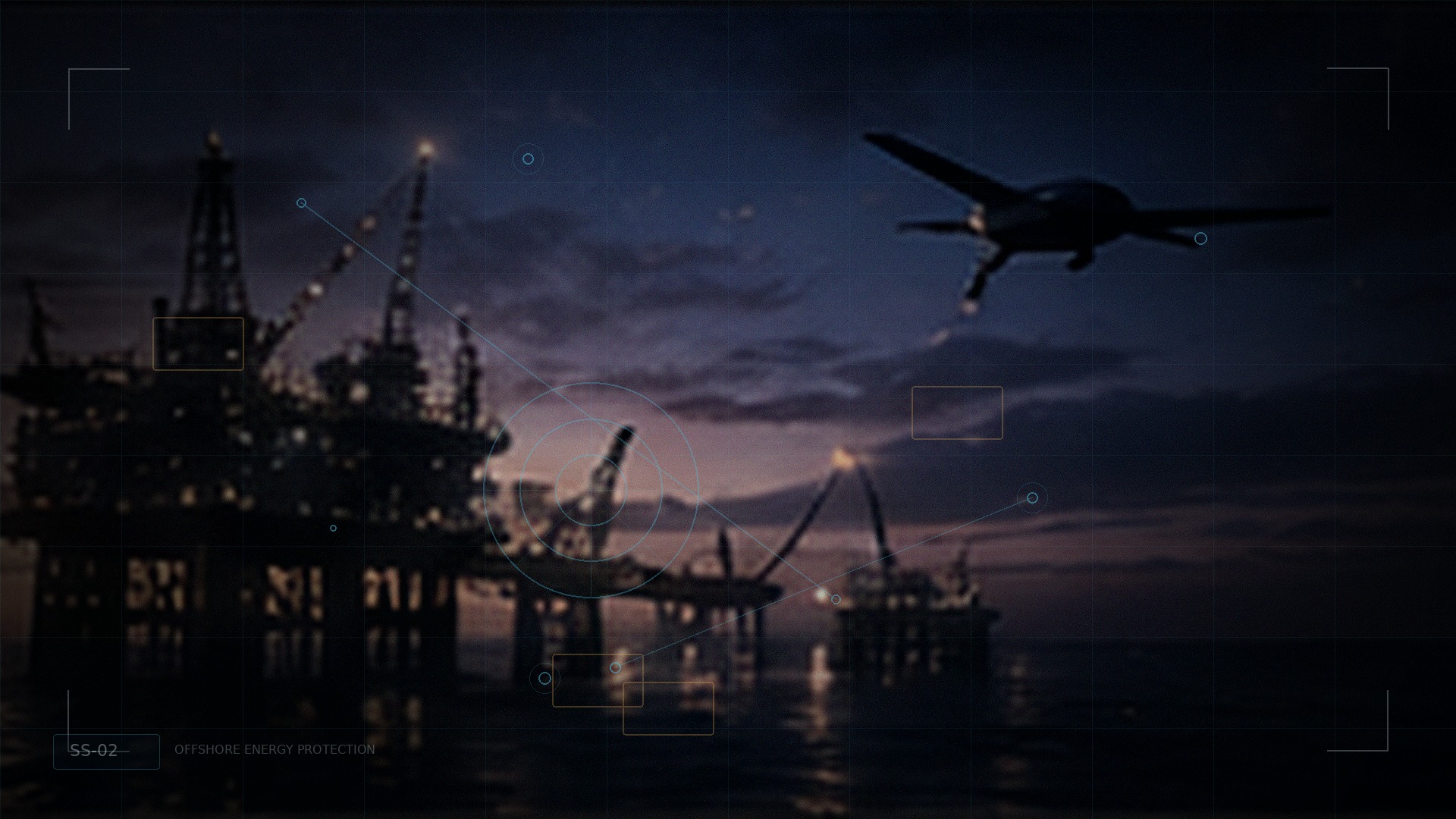
Mission Context
Persistent awareness around assets that operate beyond easy line of sight.
Offshore energy infrastructure sits across open water, exposed weather, service corridors, subsea routes and restricted operating zones. The public requirement is not a technical specification; it is a need for mission clarity, evidence-ready reporting and accountable human review.
Platforms, substations and export routes
Public scenario framing for offshore installations, nearby vessels, cable landings and infrastructure corridors.
- Asset-area context
- Service-route awareness
- Operator-reviewed evidence
Vessel, aerial and surface activity
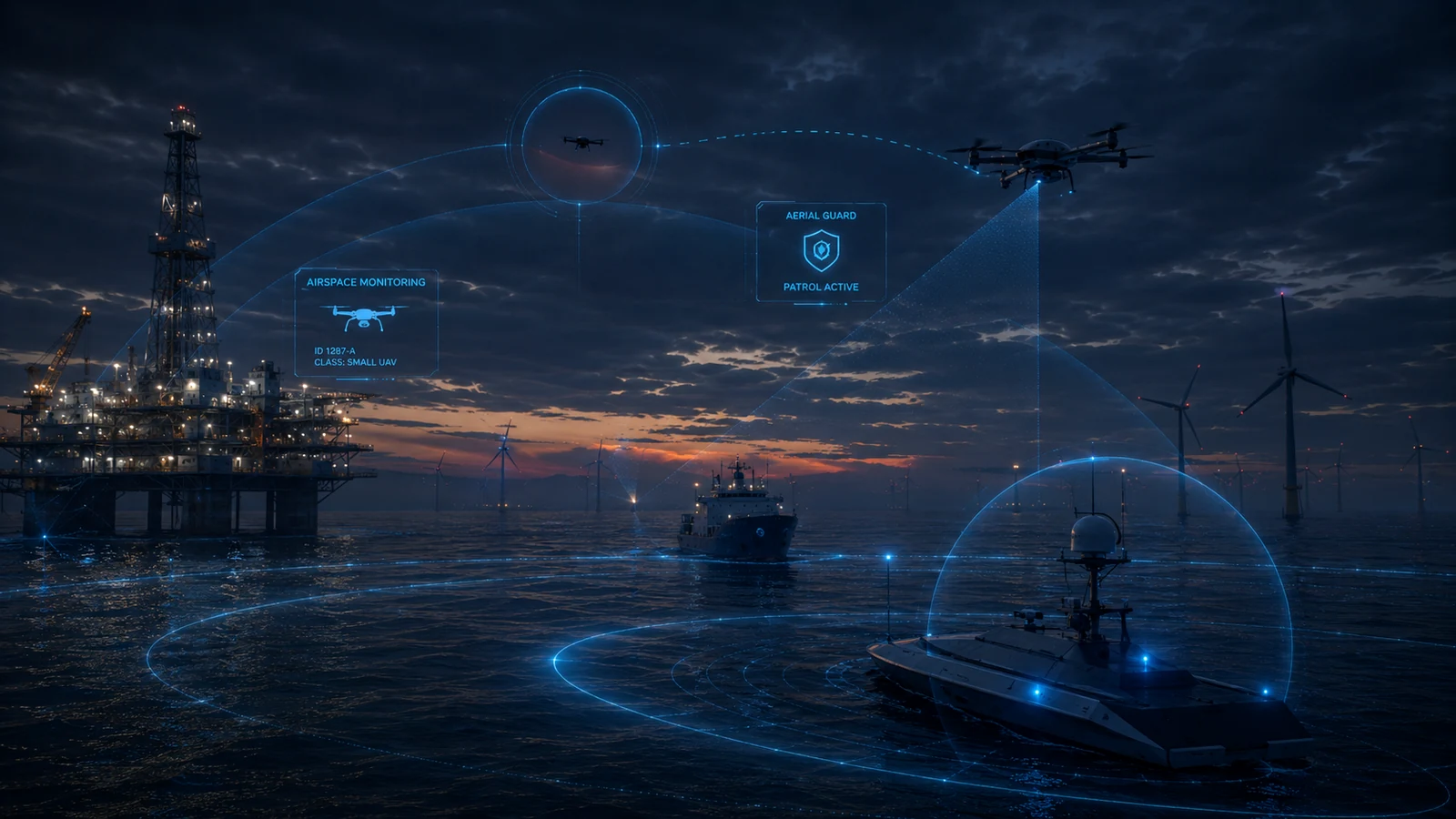
High-level awareness model for maritime movement patterns, maintenance windows and activity requiring stakeholder review.
- Approach review
- Waterside activity
- Low-altitude context
Mission logs and accountable review
Outputs are framed for reporting quality, briefing continuity and controlled disclosure rather than public operational detail.
- Event records
- Stakeholder briefing
- Disclosure boundary
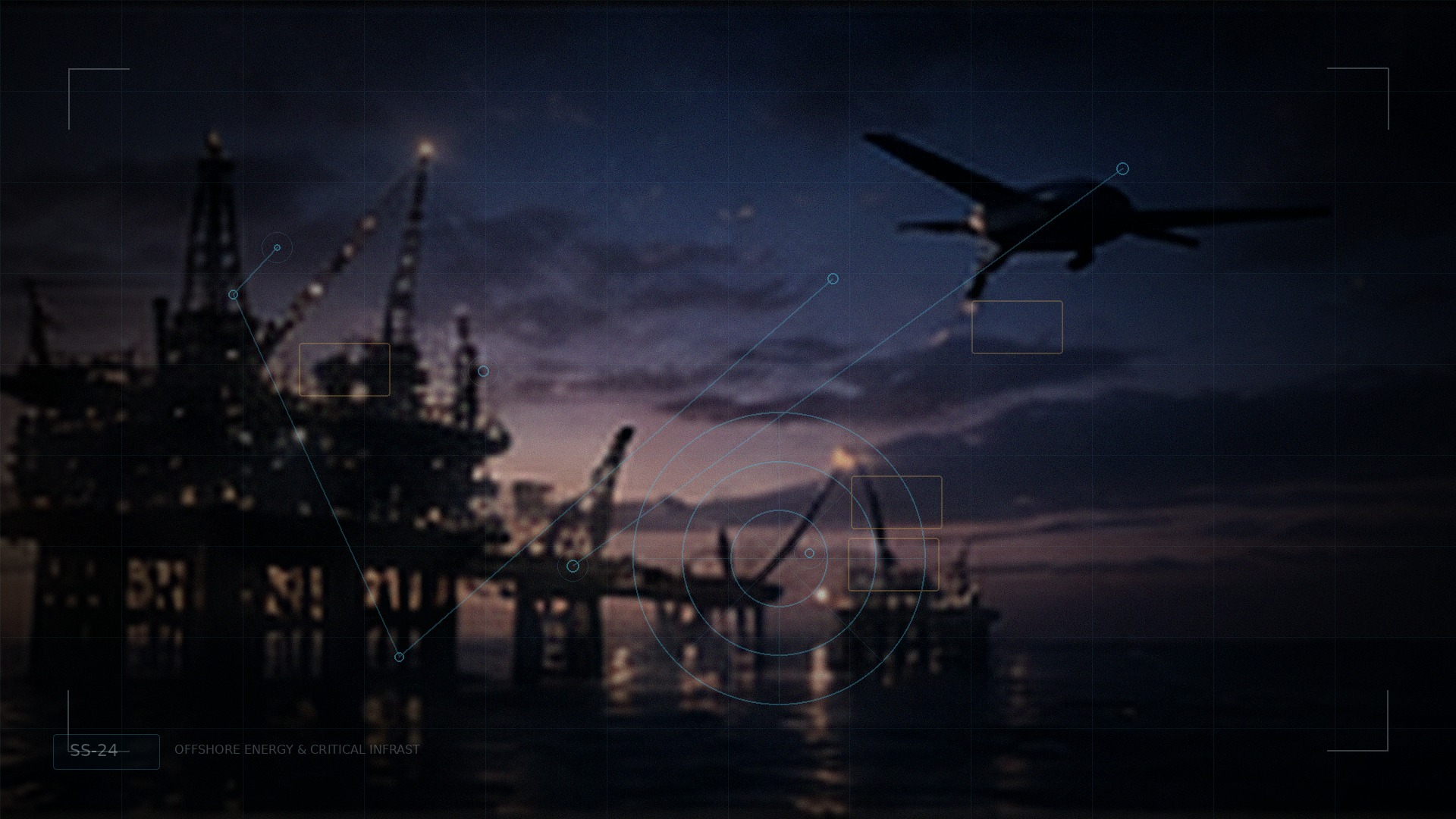
Operating Architecture
Structured like a mission solution, not a loose scenario page.
The page now follows the same logic as Sky Shadow’s Solutions route: define the environment, explain the awareness layers, show the public architecture, connect the software stack and end with a controlled pilot pathway.
Observe
Build a public mission picture around the asset area, support routes and adjacent maritime context.
Correlate
Fuse surface, aerial, fixed-site and subsea context into an operator-reviewed awareness layer.
Review
Prioritise events through human-commanded workflows, briefing logs and accountable escalation routes.
Report
Produce evidence-ready summaries for security, safety, resilience and procurement stakeholders.
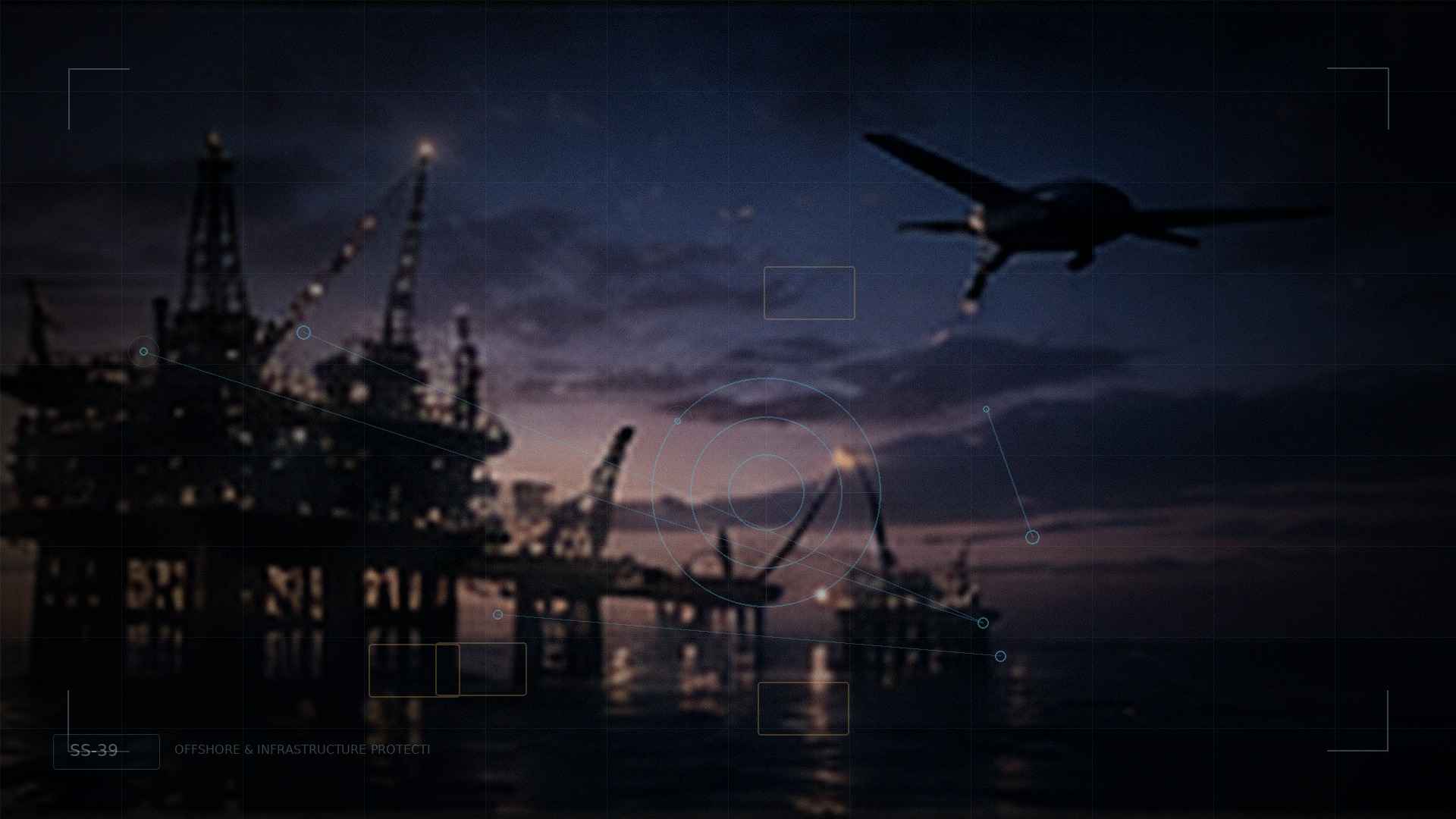
Mission Systems
Connected sensing, autonomy support and command-layer review.
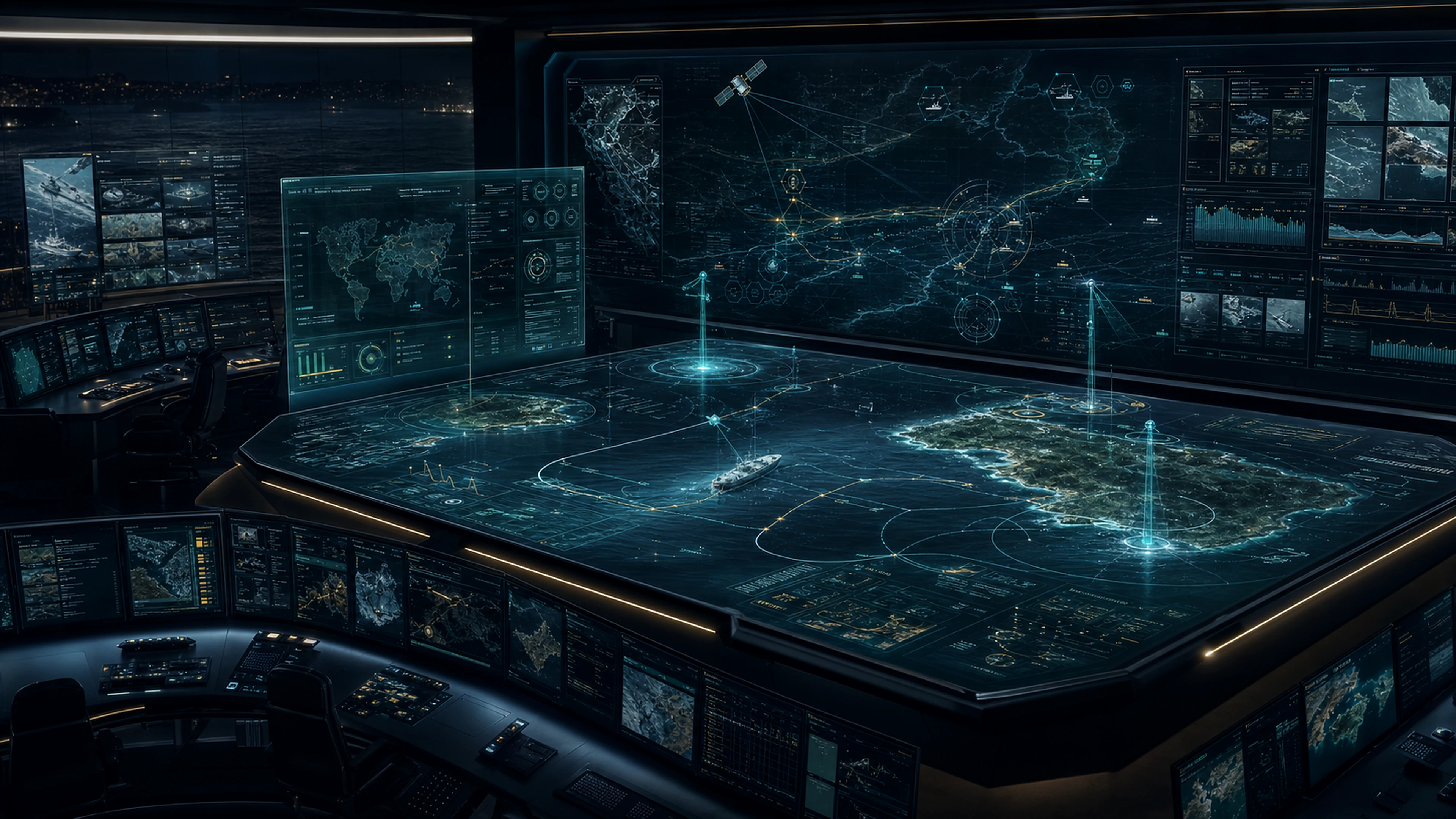
Sky Shadow presents offshore energy protection as an integrated mission system: field sensing and platform context feed the software layer, while operators remain central to interpretation, escalation and reporting.
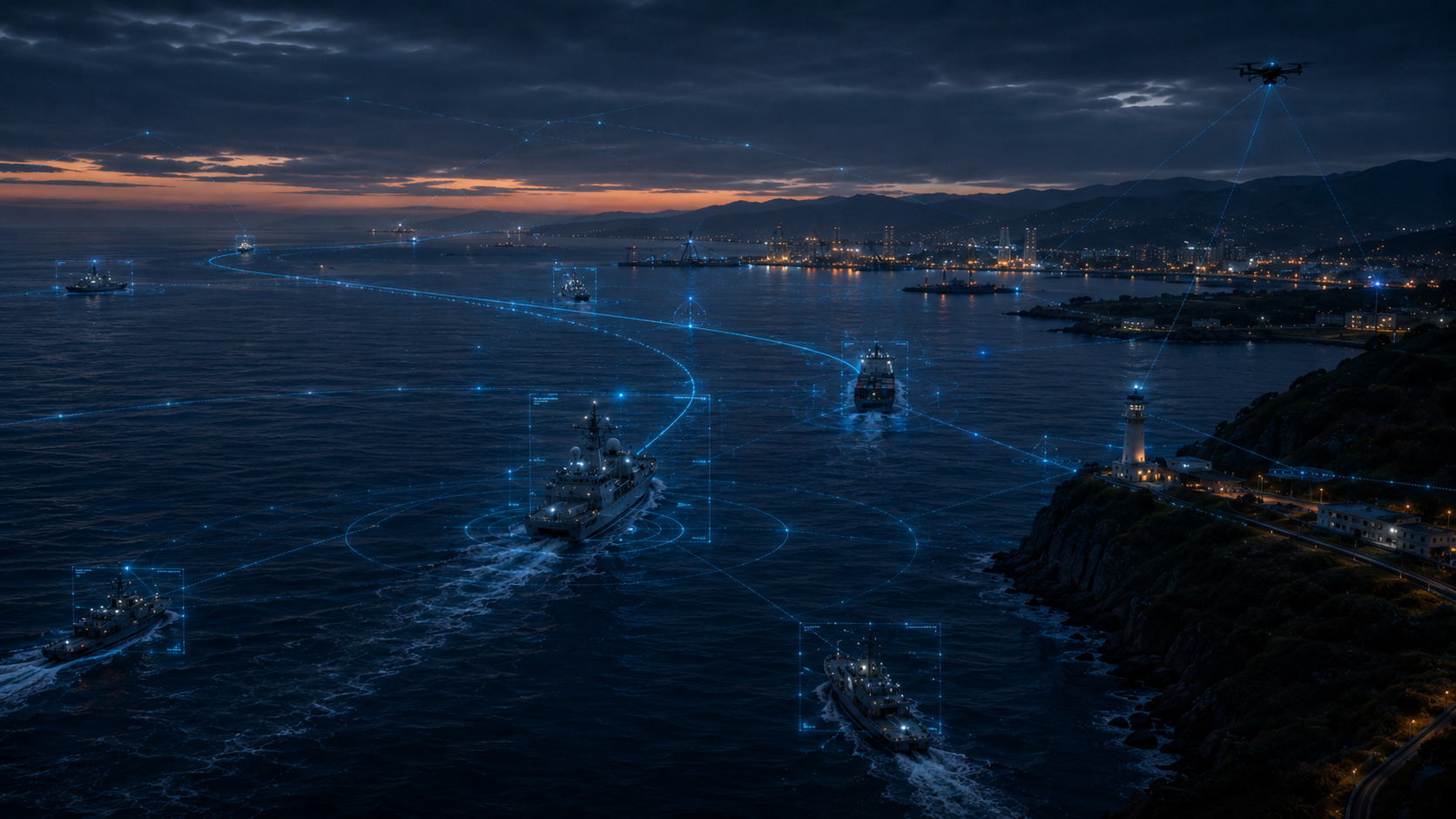
Mission intelligence
Sensor fusion, anomaly review, mission logs and reporting workflow.
Persistent watch
Multi-sensor correlation across maritime, aerial and fixed-site context.
Operator workflow
Human-commanded tasking, escalation, governance and briefing continuity.
Shared operating picture
Public-facing architecture for connected mission awareness and evidence review.
Representative Public Workflow
From asset context to evidence-ready reporting.
This simplified workflow is for orientation only. It does not disclose site layouts, sensor placement, thresholds, deployment maps, communications architecture or response procedures.
Define the asset group, stakeholder responsibilities and operating context.
Map service routes, adjacent maritime context and public disclosure boundaries.
Configure a controlled pilot around review quality, evidence outputs and support needs.
Validate whether outputs support security, safety and resilience stakeholders.
Scale deliberately across the wider asset portfolio only where the pilot route supports it.
Wide Visual Intelligence
Cinematic public concept views for each important section.
These visuals are representative public mission views. Detailed visuals, configuration assumptions and operational material remain available only through approved private briefing where appropriate.
Pilot Success Criteria
Controlled validation without public operational disclosure.
A pilot should clarify whether the output is useful to accountable stakeholders, whether the reporting quality is sufficient and whether the governance route can support wider deployment.
Pilot success criteria
- Relevant event categories and reporting triggers agreed.
- Evidence quality and retention expectations defined.
- Operational handoff and escalation model reviewed.
- Stakeholder reporting format validated.
Disclosure boundary
- No public sensor placement or countermeasure methods.
- No deployment maps, restricted procedures or performance claims.
- No protected-site assumptions outside controlled briefing.
- No technical specification on this public page.
Related Scenarios
Adjacent public scenario models.
Each scenario supports early procurement, partner and stakeholder alignment while remaining at a public, non-technical disclosure level.
Final Route
Discuss an Offshore Awareness Pilot
Request a controlled private briefing for lawful, approved use cases, partner integration, pilot scoping, infrastructure-owner review or procurement assessment.