System Layer / Human Command
AEGIS
Human-commanded mission workflow and command layer for operator-reviewed tasking, acknowledgement, escalation and accountable mission history.
Mission Context
Command workflows built around human authority
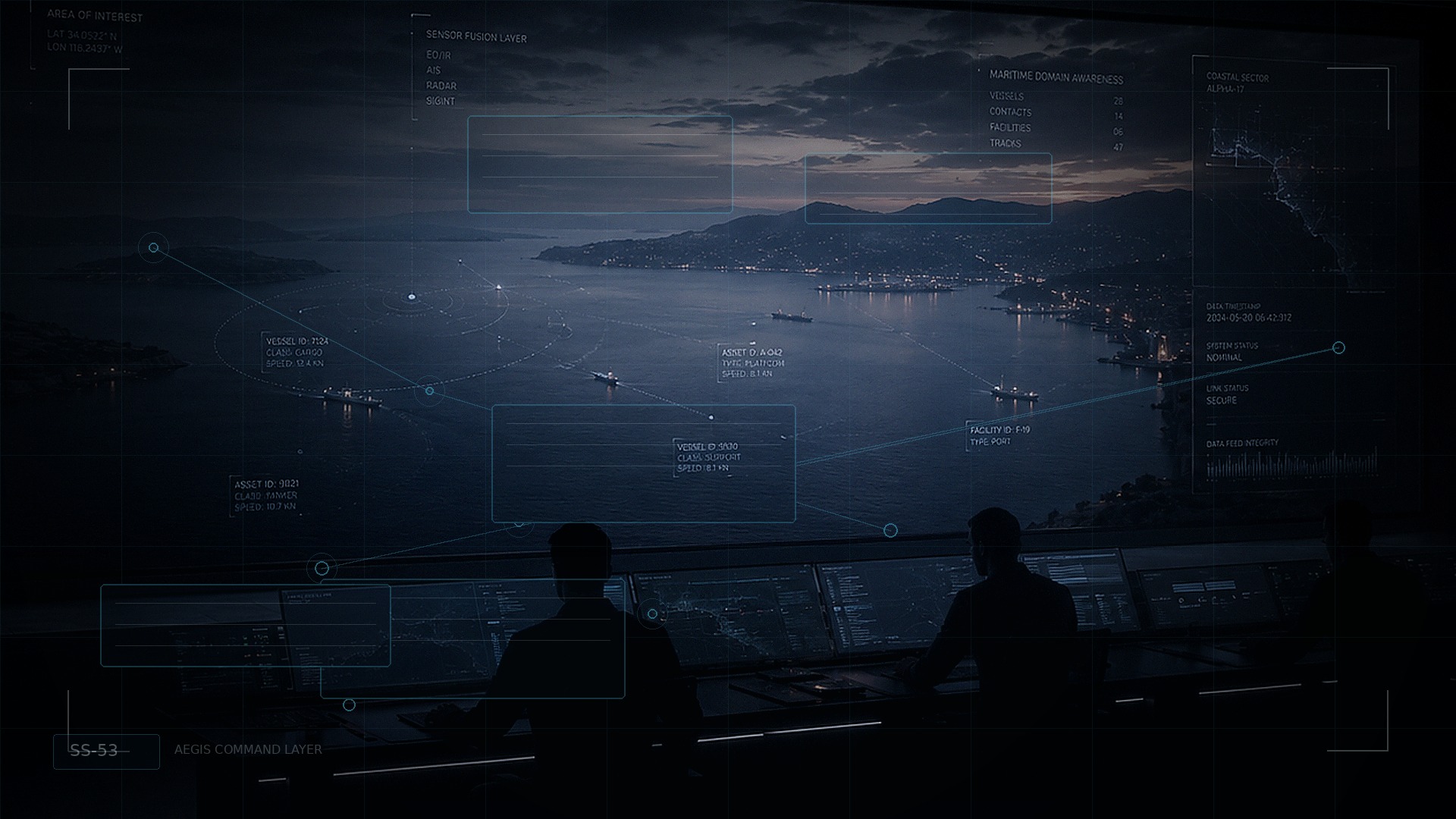
AEGIS handles tasking, review, escalation and coordination workflows for authorised teams. It is the layer that turns awareness into disciplined action: who has seen an event, what has been acknowledged, which asset or team is responsible, what escalation path applies and what record is preserved.
The emphasis is controlled mission support. AEGIS is not presented as an autonomous engagement system; it is a human-commanded workflow layer for accountable operators working with SHADOWCORE, ARGUS, Holo-Fusion and evidence-ready reporting.
Assign mission actions, watch states and review duties in a controlled workflow.
Mark alert handling, operator review and responsibility transitions clearly.
Support defined escalation paths without exposing sensitive procedures publicly.
Preserve action history, mission notes and reviewable decision context.
Capability Areas
What AEGIS brings into the operating picture
Mission action routing
AEGIS structures mission actions so operators can move from observation to review, acknowledgement and follow-on tasking without losing context.
- Task state
- Asset context
- Operator responsibility
Alert acknowledgement
Alerts and event changes can be acknowledged, annotated and carried into a review chain that is visible to authorised operators.
- Event status
- Review note
- Action log
Defined command paths
Escalation is positioned as a controlled workflow, aligned to governance, stakeholder role and mission context rather than ad hoc response.
- Role boundary
- Escalation route
- Governance model
Accountable history
Mission status, acknowledgements, task updates and operator notes can be preserved for briefing, audit and after-action review.
- Mission logs
- Action history
- Briefing outputs
Command Logic
From awareness to accountable operator action
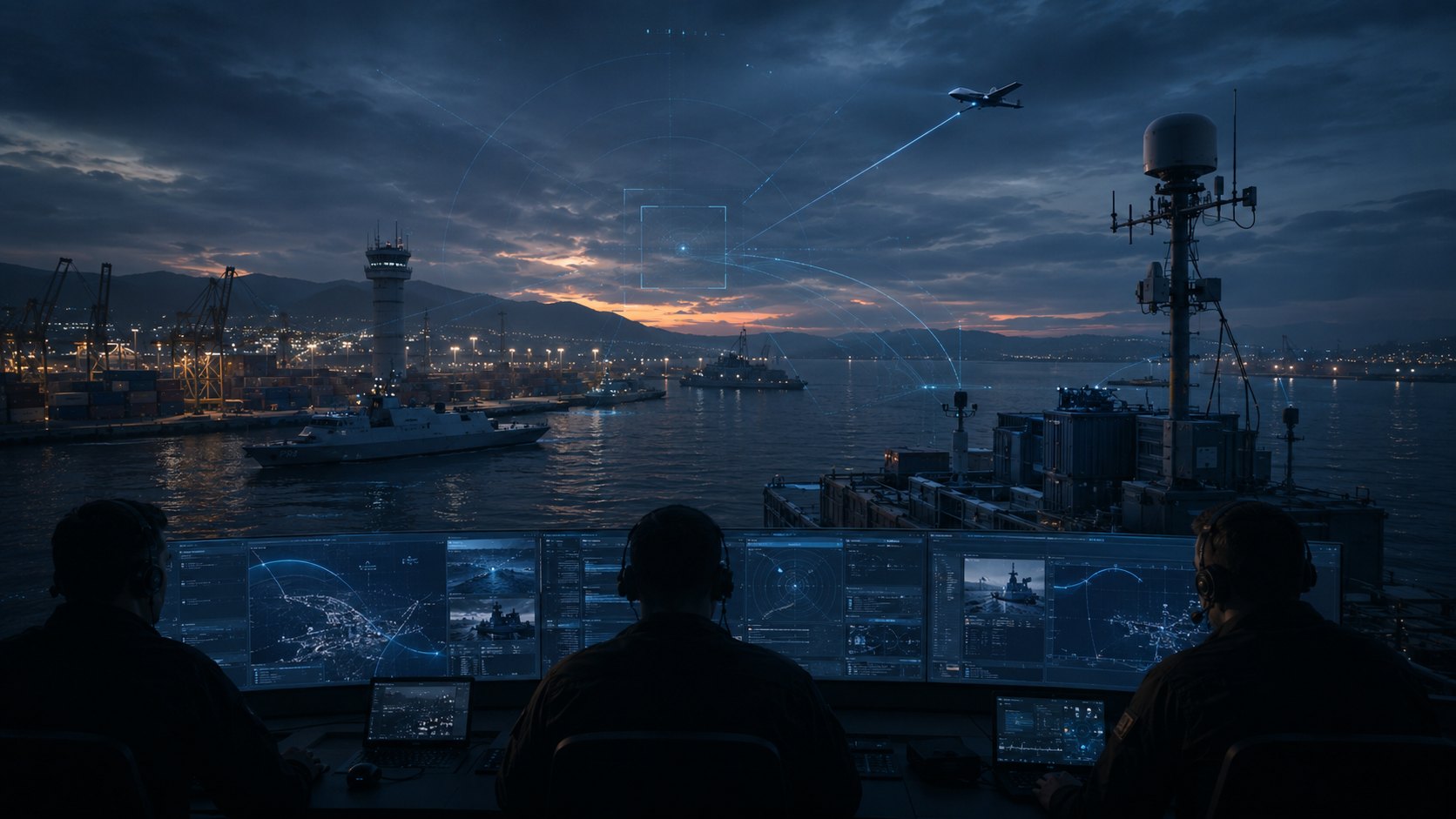
SHADOWCORE and ARGUS help form the mission picture. AEGIS gives authorised teams a structured way to act on that picture: acknowledge a change, review confidence, assign responsibility, coordinate assets, escalate where appropriate and keep the record intact.
This public page deliberately avoids tactical procedures. It describes the command architecture, review discipline and decision record at a controlled, procurement-safe level.
Mission Systems
Command layer connected to sensing, fusion and evidence systems
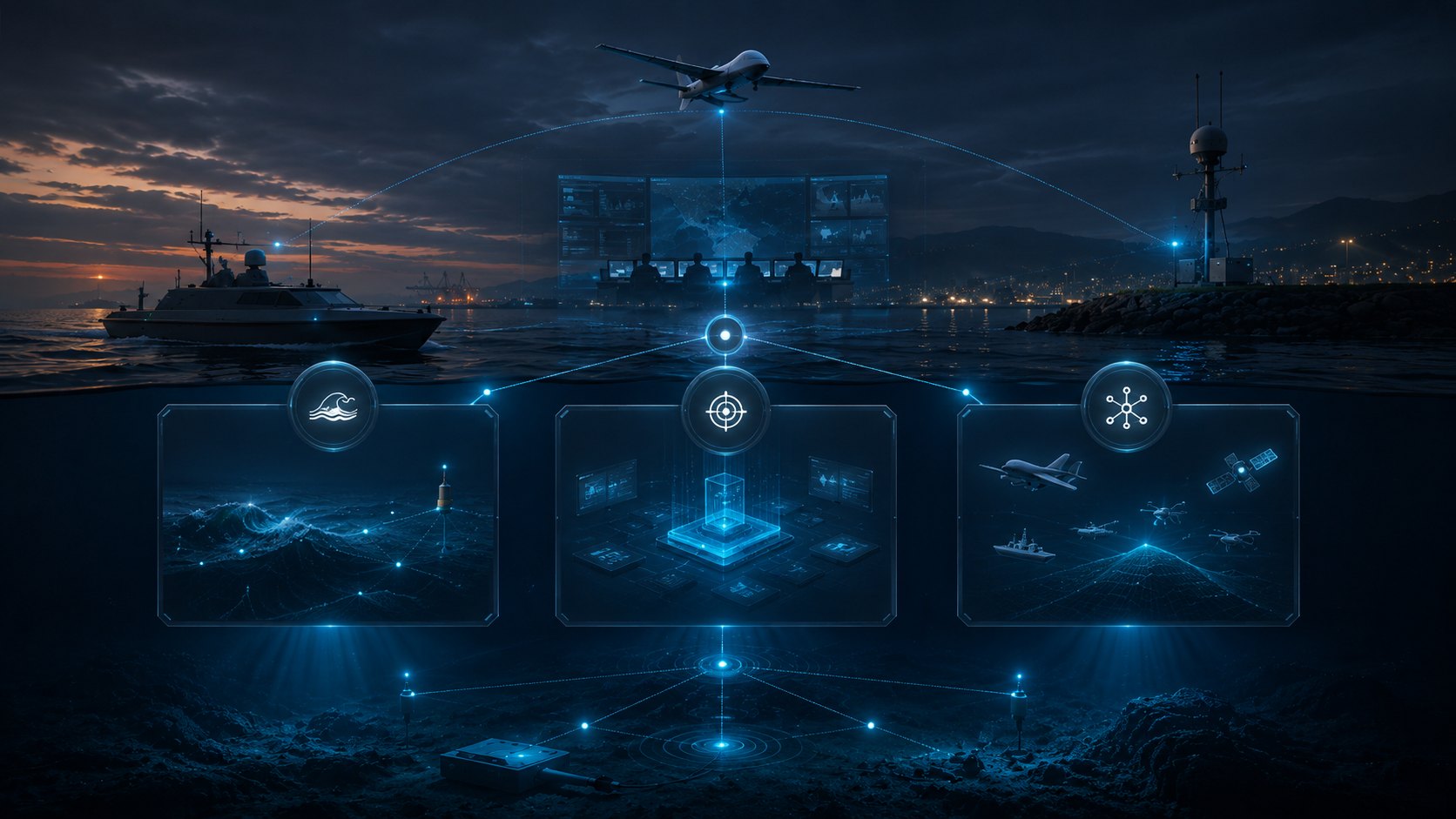
SHADOWCORE
Sensor fusion, anomaly review and mission intelligence layer that helps form the operating picture AEGIS acts upon.
ARGUS
Multi-sensor correlation and persistent watch layer for operator-reviewed awareness across defined environments.
AEGIS
Human-commanded tasking, acknowledgement, escalation and command workflow layer for authorised teams.
Holo-Fusion
Mission panels, command tables and fused views for operator-reviewed situational awareness and review workflows.
Research
Evidence records, mission logs, reporting and briefing layer for accountable decision support.
PHAROS
Fixed-site and perimeter awareness layer that can provide site-state context into AEGIS workflows.
Holo-Fusion Ready
Operator workflows brought into one interface
AEGIS structures human-commanded workflows. Holo-Fusion presents those workflows through command tables, compact panels and software views so operators can review alerts, acknowledge events, inspect assets, manage mission status and preserve accountable action history.
This supports a clean command picture: watch state, event status, operator review, mission notes and briefing outputs can sit together without suggesting uncontrolled autonomy.
Operating Context
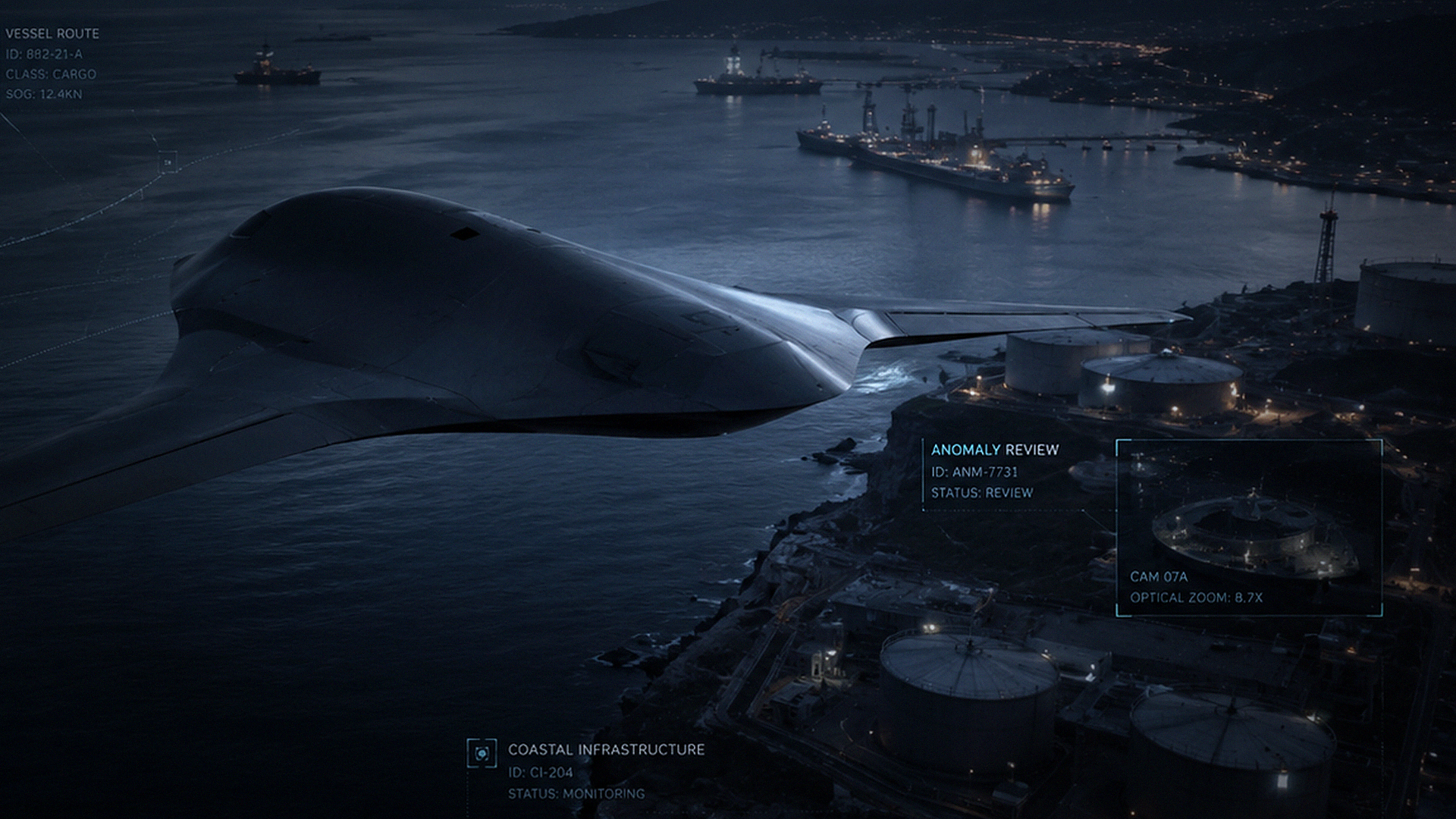
Designed for maritime, infrastructure and protected-site workflows

Governance Layer
Action history, role clarity and responsible deployment
AEGIS is built around the principle that mission systems should make operator action clearer, not remove accountability. The layer supports defined roles, visible task status, review notes, acknowledgement states and briefing-ready records.
For procurement and pilot conversations, AEGIS helps frame who sees what, who reviews what, what escalation boundary applies and how the mission history is preserved for governance and review.
Deployment Path
From requirement to controlled command workflow
Map authority
Define operating authority, roles, review expectations, escalation boundary and stakeholder responsibilities.
Select workflow
Choose tasking, acknowledgement, mission-status and briefing workflows around the requirement.
Run a controlled pilot
Validate handover points, operator usability, command clarity, reporting outputs and support requirements.
Train and govern
Align operators, escalation paths, data handling, review boundary and accountability assumptions.
Scale deliberately
Extend workflows only after the pilot route, governance model and support pathway are clear.
Procurement Notes
Buyer-facing structure, clean evidence and responsible public detail
Public information is intentionally high-level and defensive. Detailed deployment, integration and operational material is handled through a controlled briefing route.
Private Briefing
Discuss the mission command context with Sky Shadow
Share the operating environment, asset group, authority model, timescale and preferred pilot route. Sky Shadow can then map the requirement to platform, sensing, command and evidence layers.